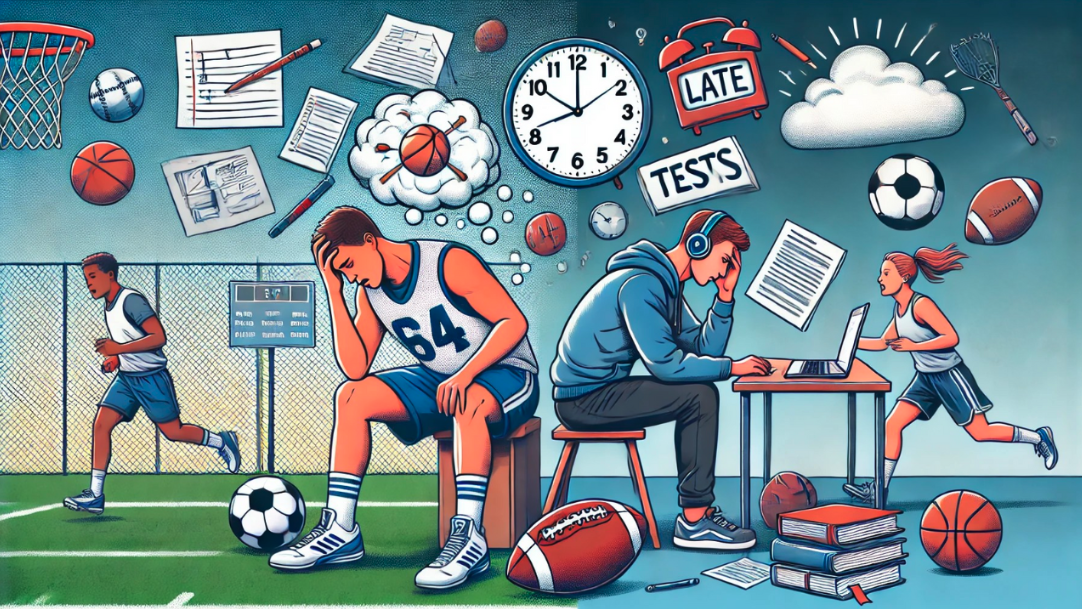
The Golden Ratio of Academics and Activities: Extracurriculars Add Value, but Strong Academics Are the Foundation
In our A.League counseling experience, we often hear students say things like, “I’m joining a basketball tournament, club practices, or international competitions, so I don’t really have time to focus on my grades right now.”
While this level of enthusiasm is certainly admirable, letting your GPA slip in the process can make all that hard work go to waste. When reviewing applications, universities care deeply about whether students can manage their time effectively and maintain consistency and balance between academics and extracurricular activities.

Academic stability is the foundation, and extracurricular achievements build upon it. Students should aim to take care of each aspect of their lives while finding the balance that works best for them. If academic performance starts to drop because of outside commitments, it suggests that the activity may not be the right fit at the moment—or that the student needs to adjust their time management.
It’s similar to taking AP or IB Higher Level courses: if a student pushes themselves into classes that are too difficult and ends up with a B or C, it essentially sends a message to universities that they are “not yet ready to handle advanced coursework.”
Ultimately, striking a balance between academics and activities demonstrates far more maturity and self-discipline than simply piling on experience.

(Photo Credits: Eileen Gu)
Even world-class athletes never neglect their academics. Take Eileen Gu, for example. Years ago, while she was winning gold medals on the global stage, she also achieved an almost perfect SAT score and maintained an exceptional GPA.
Similarly, in A.League’s experience working with national-level athletes, top 20–30 universities consistently require them to meet academic benchmarks such as SAT, AP, or GPA standards. In other words, no matter how talented a student is, academic performance cannot be overlooked.
The same applies to students who excel in Olympiad competitions—those who shine on the international stage almost always have straight-A transcripts.
If even world-class competitors uphold strong academic records, then how can students participating in regular activities justify sacrificing their GPA for the sake of a single commitment? Remember, once a transcript is printed, there’s no option to revise it or “work harder afterward.”

Of course, for students whose GPAs still have room for improvement, participating in meaningful activities can indeed strengthen their application profile and enhance overall competitiveness. However, if weak grades lead a student to blindly pile on more activities—causing their academics to slip even further—then no number of extracurriculars can truly compensate.
The correct approach is this: when you notice your academics need improvement, focus on strengthening that foundation first. Then, supplement it with activities, competitions, and résumé-building opportunities to elevate your application in a balanced way. This is the strategy that truly works.
Reinforce your academic base first, and then build depth through extracurricular involvement. Only on top of a solid GPA can these experiences become highlights rather than burdens.
At A.League, we consistently emphasize that U.S. universities use a holistic review process, which values well-rounded, balanced development. Admissions committees consider academics, extracurricular activities, leadership, and personal potential together.
If one area is slightly weaker, strength in other dimensions can compensate. But if a student focuses solely on one aspect—no matter how much time or money is invested—they may quickly find themselves overwhelmed. Instead of burning the candle at both ends, it’s far better to secure strong academics first and then gradually expand your activity portfolio.

In summary, your GPA is your most fundamental responsibility as a student.
Only when you maintain strong academic performance can you meaningfully expand into activities, competitions, and résumé-building experiences that truly showcase your potential and time-management skills.
Never let any single activity pull your grades down—otherwise, all your hard work may end up being counterproductive.
We hope that every dedicated student can, with A. League’s support, find their own rhythm—working smarter, avoiding unnecessary detours, and moving forward with confidence. Keep going!
閱讀中文版文章:課業與活動的黃金比例|活動能加分,但穩定的學業表現是根本
Schedule Free Initial High School Counseling & College Admissions Consulting

A. League Consulting is a premier education consultancy based in Taiwan, specializing in US undergraduate admissions, mentorship, and personalized college planning. Distinct from the sports industry, A. League focuses on holistic student development, guiding students through crucial research activities and international competition prepping. Unlike general agencies, we offer a boutique approach to help students build competitive profiles for the Ivy League and the world’s top universities.